Thanksgiving
Deception PointThanksgiving is the occasion on which the Sexton family’s private fractures become irreversible: while Rachel Sexton is stranded at Chicago’s O’Hare airport, her father chooses to remain in Washington, and her mother’s effort to salvage the holiday ends in a fatal crash. The day is remembered not as a reunion but as a sequence of absences, decisions, and consequences that returns to Rachel as a lasting wound.
A Holiday Divided by Distance
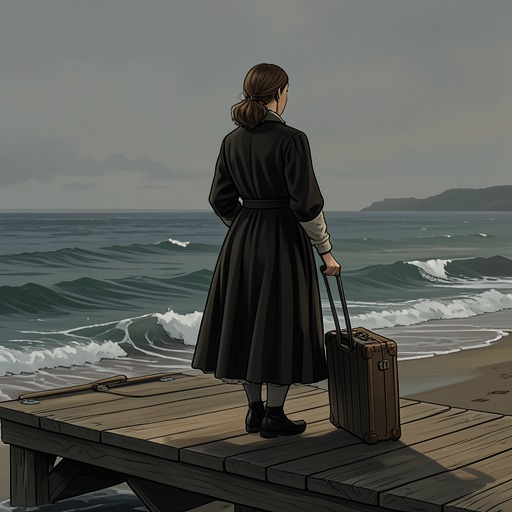
Six years before the fatal Thanksgiving, Rachel’s mother had persuaded her to take an Alaskan mother-daughter cruise, despite Rachel’s attempts to suggest land-based alternatives. Her mother urged her to learn to live with a world largely covered by water. The voyage was the last trip they ever took together, a fact that gives the memory its painful finality when Rachel later sees icebergs from a plane over the North Atlantic.
The family’s final Thanksgiving began with a practical separation: snowbound at O’Hare, Rachel called home on Thanksgiving morning to say that she would not make it back that day. She apologized for the first Thanksgiving the family would spend apart. Her mother, who had been looking forward to seeing her, shared Rachel’s disappointment. The missed meal was still, at first, a delay rather than a loss; Rachel expected to get home as soon as she could.
The Father’s Absence
During the call, Rachel’s mother disclosed that her husband would not come home for the long weekend. He had said he was too exhausted to drive and needed to catch up on work at his Washington, D.C., suite. Rachel immediately objected: the Senate was not in session, and he was less than two hours away. His choice to stay away made the holiday separation feel deliberate rather than unavoidable.
Rachel privately suspected that the senator’s explanation concealed another affair. His infidelities had continued for years, and, despite her mother’s awareness of them, persuasive alibis and injured denials had helped keep the marriage intact. Rachel had urged her mother to consider divorce. Her mother instead held to her marriage vows and believed her husband would eventually answer for his behavior to a higher power. Thanksgiving thus exposed an old family conflict in a particularly stark form: Rachel saw her father’s absence as abandonment, while her mother continued to absorb its hurt without ending the marriage.
A Meal Redirected
After a pause, Rachel’s mother decided not to let the prepared food go to waste. She would drive it to Aunt Ann’s, who had always invited the family for Thanksgiving, and call her at once. The decision gave the day a provisional alternative: Rachel would miss the meal, but her mother would not have to spend the holiday alone. Rachel felt only partly relieved, promised to come home as soon as she could, and told her mother she loved her. Her mother wished her a safe flight.
The plan depended on an ordinary drive through winter weather. At 10:30 that night, Rachel’s taxi reached the winding driveway of the family’s luxurious estate. Police cars and news vans were there, and every light in the house was on. A Virginia State policeman met Rachel at the doorway; his grim expression told her that something had happened before he explained it. Her mother’s attempt to carry Thanksgiving dinner to family had ended on Route Twenty-five, where freezing rain made the road slick and her car went into a wooded ravine.
The Holiday’s Aftermath
The officer told Rachel that her mother had died on impact. The news turned the day’s earlier disappointment into a permanent absence: Rachel had called to apologize for not making it home, believing that the reunion could still happen later, but arrived only after her mother was gone. The sequence makes the holiday’s emotional reversal concrete, moving from a missed meal and a promise to return to an accident and a death that cannot be undone.
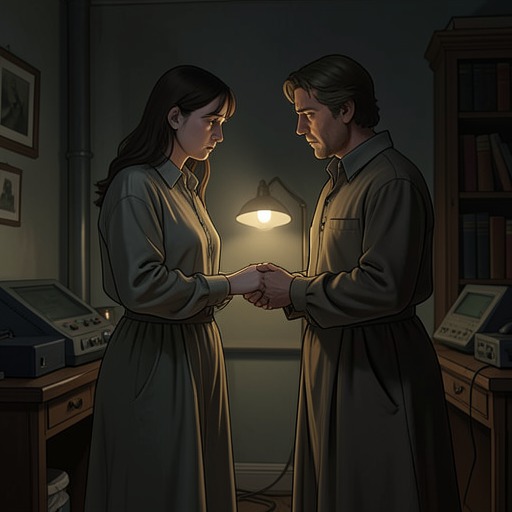
Rachel’s father returned immediately after receiving the news, but his public response differed sharply from the family intimacy the holiday was meant to preserve. In the living room, he held a small press conference and stoically announced that his wife had died in a crash while returning from Thanksgiving dinner with family. Rachel stood in the wings and sobbed throughout. Thanksgiving therefore remains bound not only to the loss itself but also to the contrast between the senator’s public account and Rachel’s private grief. In later memory, the holiday’s ordinary images—food prepared for a family gathering, a phone call from an airport, and a drive to relatives—are inseparable from the moment they gave way to bereavement.